New Living Expo · Explore & Discover
Sustainability
Living our connection with the Earth
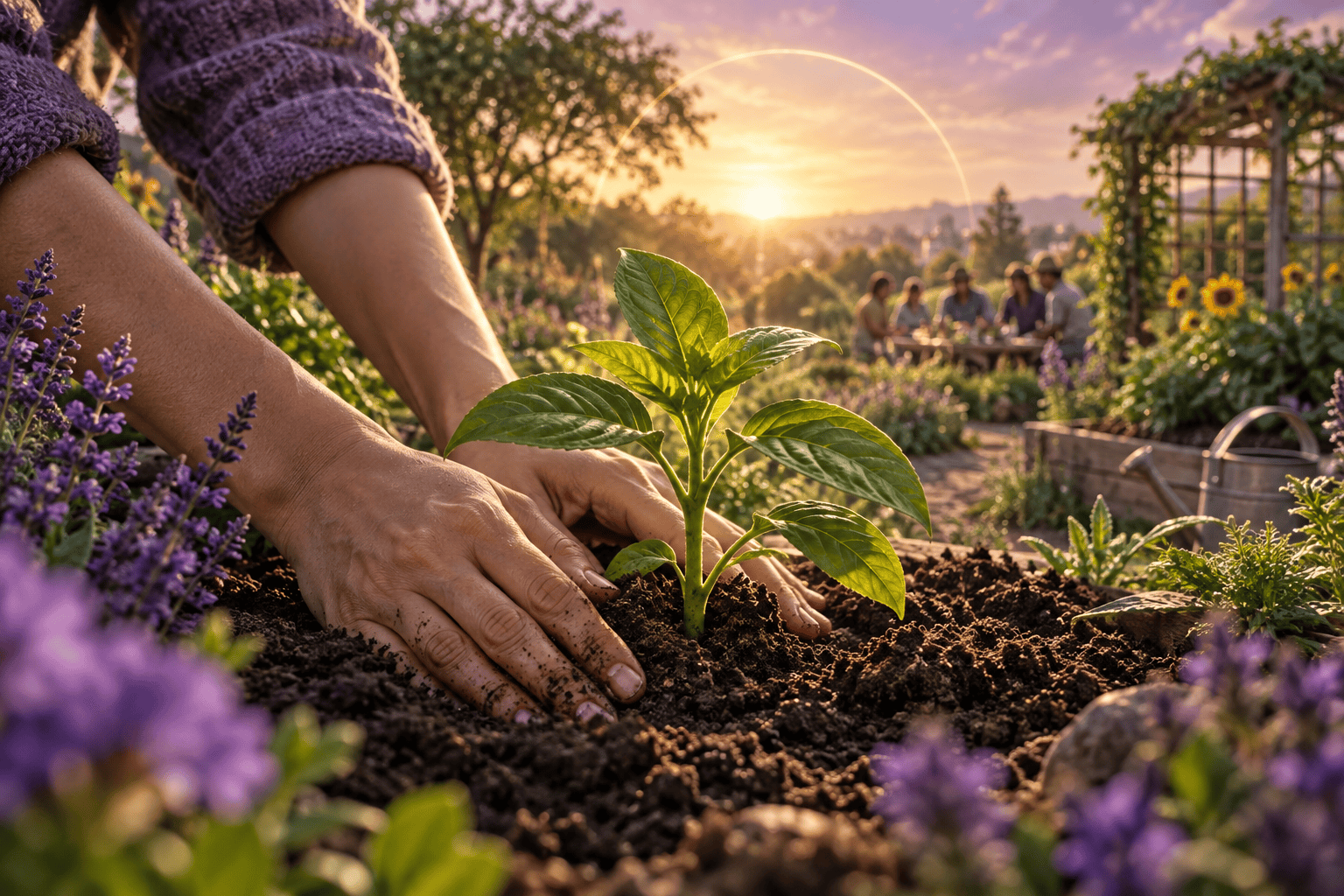
The Earth is part of the relationship
An awakening can begin as an inward experience and gradually change the way we see everything around us. Water becomes more than a resource. Food becomes a relationship with soil, sunlight, and the people who grow it. The place we live begins to feel like a living community we participate in.
Sustainability is one way to give that awareness a practical expression. Within a consciousness-centered worldview, care for the planet follows naturally from the feeling that our lives are connected. The invitation is to bring that relationship into what we make, buy, share, and protect.
Small choices belong to a larger movement
Climate research gives us a clearer view of how everyday life and larger systems interact. The IPCC's 2022 assessment describes significant opportunities to reduce emissions through changes in the provision and use of housing, transport, and food, supported by infrastructure and technology. [1]
This creates many points of participation. We can reduce waste in a household, support a community garden, share tools, or help advocate for better local transport. A conscious choice becomes easier to sustain when it is supported by a community and designed into the places we live.
The same principle applies to buildings. UNEP's reports examine the energy and material demands of the built environment and the opportunities for change. [2] Our homes and gathering spaces can become part of a more regenerative way of living, especially when we think about their whole life rather than their appearance alone.
Nature can be a teacher and a place of restoration
Many spiritual traditions encourage a relationship with the natural world grounded in gratitude and reciprocity. You might experience that through tending a garden, sitting beneath a tree, or observing the changing seasons. The value often comes from returning, paying attention, and allowing a place to become familiar.
A 2019 observational study found an association between spending at least 120 minutes a week in nature and self-reported health and wellbeing. The finding does not establish a guaranteed dose or a causal relationship, but it adds to the reasons for making access to nature part of a wellbeing conversation. [3]
A personal practice can be simple: visit the same patch of green regularly, notice what is growing, and learn what supports it. Ask what you can contribute as well as what you receive. Ecological awareness becomes more intimate when it has roots in an actual place.
Choose one expression of care
Begin with a recurring part of your life. Perhaps you can plan meals to reduce waste, repair something useful, support a local grower, or organize a shared resource with neighbors. Choose a change that feels meaningful enough to repeat. Let it grow through experience rather than pressure to become perfect.
New Living Expo brings sustainability into the conversation because expanded consciousness has consequences in the world we share. A vision of a New Earth becomes more tangible through the communities, habits, and systems we create together. Every practical act of care is an opportunity to embody the connection we speak about.